Research for Good
Our team includes researchers at world-leading universities who are actively publishing innovative peer-reviewed scientific research that we think may offer new solutions for important challenges that you are passionate about.

New study uses digital data to monitor unprecedented displacement in Gaza in near real time
A new study by Oxford researchers from the Leverhulme Centre for Demographic Science (LCDS), Edith Darin, Ridhi Kashyap, and Douglas Leasure, introduces a novel approach to tracking population movements in conflict zones, offering a near real-time view of forced displacement in the Gaza Strip. The research, published in Population and Development Review, leverages high-frequency digital data to provide one of the most detailed accounts of population dynamics during the first six months of the Israel–Hamas war.
Darin, E., Kashyap, R., & Leasure, D. R. (2026). Leveraging High-Frequency Digital Data to Analyze Forced Displacement Dynamics: A Case Study from the Gaza Strip. Population and Development Review. doi:10.1111/padr.70064


High-resolution population mapping from sparse survey data and building footprints in DRC
By linking household surveys to high-resolution building footprints derived from recent satellite imagery, this project estimated population sizes by age and sex for every 100-m grid cell in the Democratic Republic of Congo.
Boo G, Darin E, Leasure DR, Dooley CA, Chamberlain HR, et al. 2022. Nature Communications, 13(1):1330. doi:10.1038/s41467-022-29094-x

Mapping hard-to-reach communities in Colombia by linking high-tech satellite data with low-tech community workshops
Working with DANE, we developed a method linking satellite remote sensing of buildings with information from community workshops and partial census data to strengthen representation of difficult-to-access communities.
Sanchez-Cespedes LM, Leasure DR, Tejedor-Garavito N, et al. 2024. Population Studies, 78(1):3-20. doi:10.1080/00324728.2023.2190151

National population mapping from sparse survey data in Nigeria while accounting for uncertainty
This paper developed a Bayesian statistical method to provide up-to-date population estimates for every 100-m grid cell across Nigeria, where census timing and quality created major data gaps.
Leasure DR, Jochem WC, Weber EM, Seaman V, Tatem AJ. 2020. Proceedings of the National Academy of Sciences, 117(39):24173-24179. doi:10.1073/pnas.1913050117

Classifying settlement types from multi-scale spatial patterns of building footprints
This paper introduced a method to identify and map settlement types from building patterns observed via satellite remote sensing, supporting urban analytics and planning applications.
Jochem WC, Leasure DR, Pannell O, Chamberlain HR, Jones P, Tatem AJ. 2021. Environment and Planning B, 48(5):1161-1179. doi:10.1177/2399808320921208
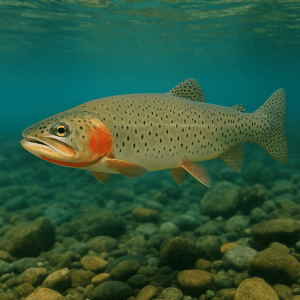
Forecasting trout populations using satellite remote sensing to assess extinction risk
This paper developed a Bayesian population forecasting approach using remotely-sensed habitat and climate characteristics to estimate extinction risk for isolated Lahontan cutthroat trout populations.
Leasure DR, Wenger SJ, Chelgren ND, et al. 2019. Ecology, 100(1):e02538. doi:10.1002/ecy.2538